Smoke Coming Into the Room? Six Draft Problems and What to Check First
You light the first fire of the season and the smoke comes out into the room instead of going up the chimney. In Cleveland homes it is almost always one of a handful of draft problems: a cold flue, a closed damper, a house pulling air the wrong way, a blockage, or a flue that is damaged or too short. Here is how to tell which one you have, what is safe to check yourself, and when to stop and call.
1. A Cold Flue Is the Most Common Culprit
Smoke needs warm air above it to rise. A chimney that has sat cold for months, or a flue on an outside wall on a freezing night, holds a plug of heavy cold air. When you light a small fire, that cold air can push back down before the flue warms up, and the smoke spills into the room instead.
That is why the problem shows up on the first cold snap of the year. Cleveland sits at or below freezing on a lot of nights from November through March, so a masonry chimney on an exterior wall spends much of the season cold.
The fix is to warm the flue before you build the fire. Open the damper fully, then hold a rolled-up sheet of newspaper, lit at one end, up near the open damper for a minute or two so the warm air starts moving upward. Keep sleeves and hair well clear of the flame, and never use anything other than paper. Then start the fire with kindling and a small, hot fire rather than a big log on a cold grate.
2. A Closed, Stuck or Partly Open Damper
It sounds too simple, but a damper that is closed, or only open an inch or two, is behind a surprising share of smoky fires. Look at the handle or lever first. With the fire cold, use a flashlight and look up into the throat of the fireplace to see whether the damper plate is actually open all the way.
If the plate will not move, only opens part way, or is rusted or warped, do not force it or reach in with tools while the fireplace is in use. A damper that has stopped working is a repair, and it is one of the quicker ones a chimney technician handles on a visit.
3. Fans, Dryers and a Tight House Pulling Air the Wrong Way
A chimney only works if air can go up it. Anything in the house that pushes air out, such as a kitchen range hood, a bathroom fan, a clothes dryer, or a furnace and water heater drawing combustion air, lowers the pressure in the house. The house then looks for replacement air, and the open chimney is the biggest hole it can find. Smoke follows that air down and into the room.
Newer, tighter and better-insulated homes make this worse, and so does winter. In cold weather, warm air leaks out of the upper floors, and cold air is drawn in low in the house, right where most fireplaces sit.
There is a simple test. With the fireplace cold, turn off the range hood, bath fans and dryer. Then crack a window or door in the same room as the fireplace, about an inch, and light the fire. If the smoke now goes up the chimney, the house is short of makeup air, not the chimney. Opening a window is a workaround, and a technician can tell you whether a permanent fix such as an outside air kit makes sense for your house.
4. The Wood, the Size of the Fire and the Glass Doors
Sometimes the chimney is fine and the fire is the problem. Wood that is wet or freshly cut smolders instead of burning hot, and a smoldering fire makes a lot more smoke and a lot less draft. Firewood is generally ready after it has been split, stacked off the ground and left to dry for many months.
A fire that is too small will not heat the flue fast enough, and a fire built too far forward on the grate can send smoke into the room instead of up the throat. If your fireplace has glass doors, check what the manufacturer recommends for door position while a new fire is getting started. A door closed too early can starve a young fire of air and make it smolder.
5. A Blockage or a Clogged Chimney Cap
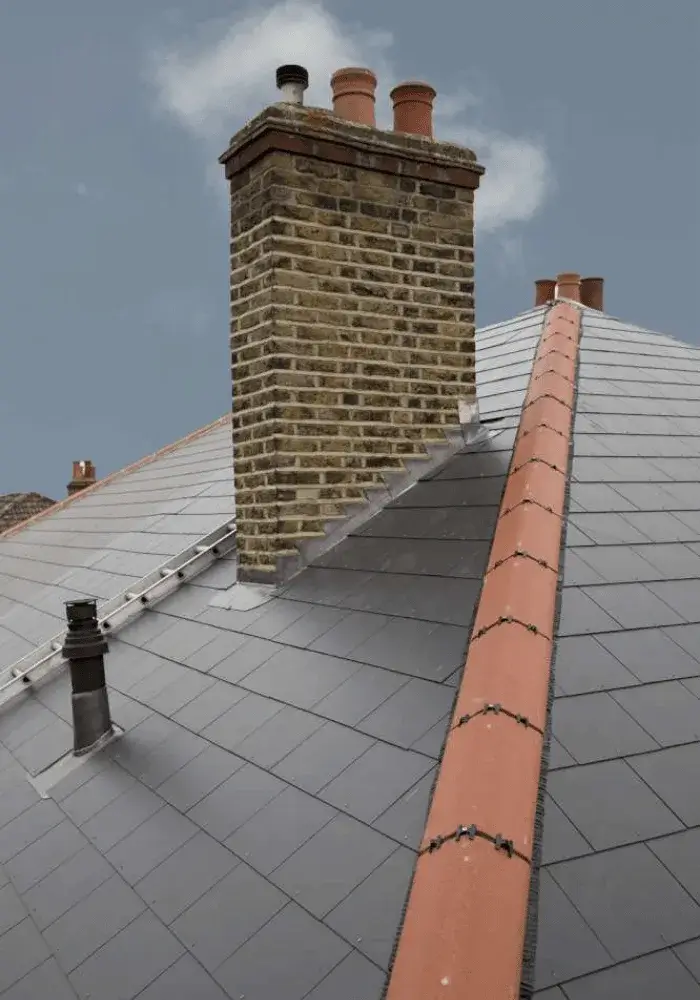
If the air cannot get out the top, the smoke has nowhere to go but back down. Leaves, bird and squirrel nests, and heavy creosote buildup on the flue walls all narrow the passage. So does a cap screen that has clogged with soot or debris, which is common on caps with fine mesh.
None of this is something to clear yourself from the roof or the firebox. A sweep removes the blockage and, just as important, looks at why it formed. If the cap is missing, rusted through or crushed, replacing it is usually part of the fix. See our chimney cap installation service. Heavy black buildup inside the flue is a separate fire risk, which we cover in how to get rid of creosote in a chimney.
6. Flue Damage, the Wrong Size or a Chimney That Is Too Short
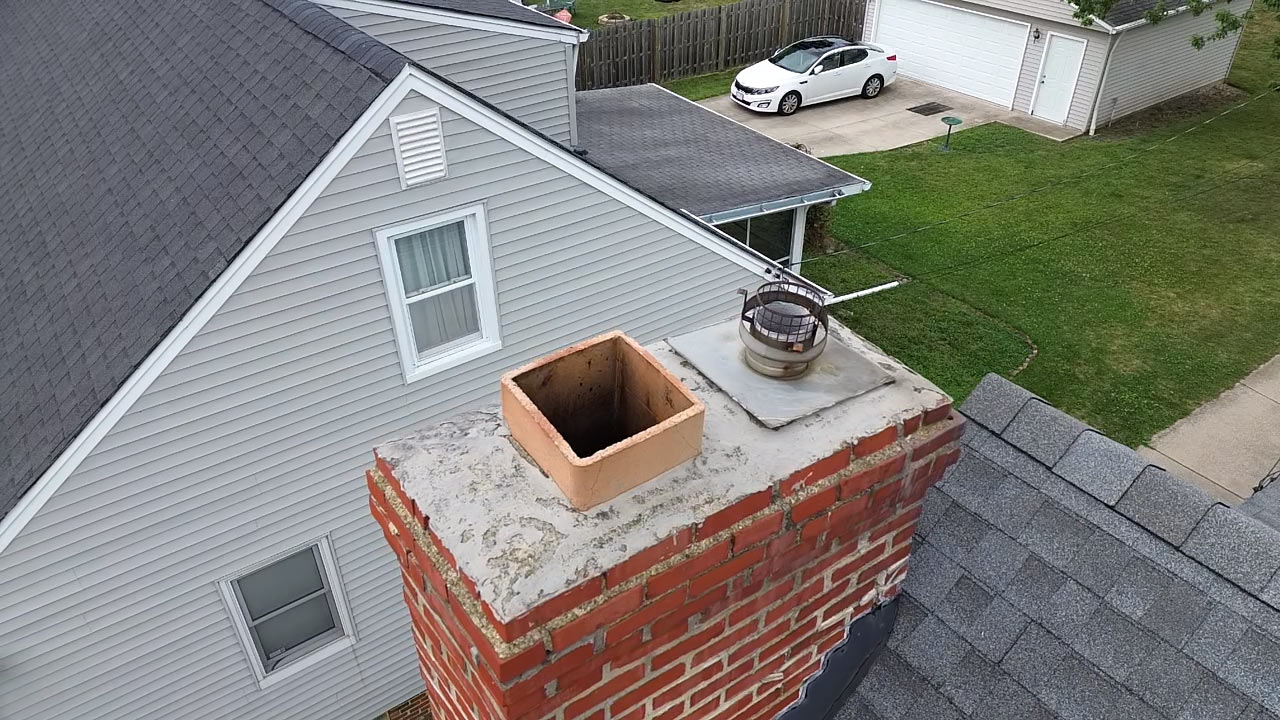
Older Cleveland chimneys often have clay flue tiles that crack, shift or break apart over decades of freeze and thaw. A damaged flue can leak smoke into the house or the wall cavity, and it can narrow the passage enough to ruin the draft. A flue that is too large or too small for the fireplace opening, often after a heating appliance change, also drafts poorly. A properly sized liner is the usual repair, which you can read about on our chimney liner installation page.
Height and surroundings matter too. The model residential building code asks a masonry chimney to extend at least 3 feet above the point where it passes through the roof, and at least 2 feet higher than any part of the building within 10 feet, often called the 3-2-10 rule (IRC R1003.9). A chimney that falls short of that, or sits in the wind shadow of a tall tree or a higher roofline, can get wind pushed down the flue. Lake-effect gusts make that worse here, and it often shows up only on windy days. Local codes can differ, so a technician checks what applies to your home.
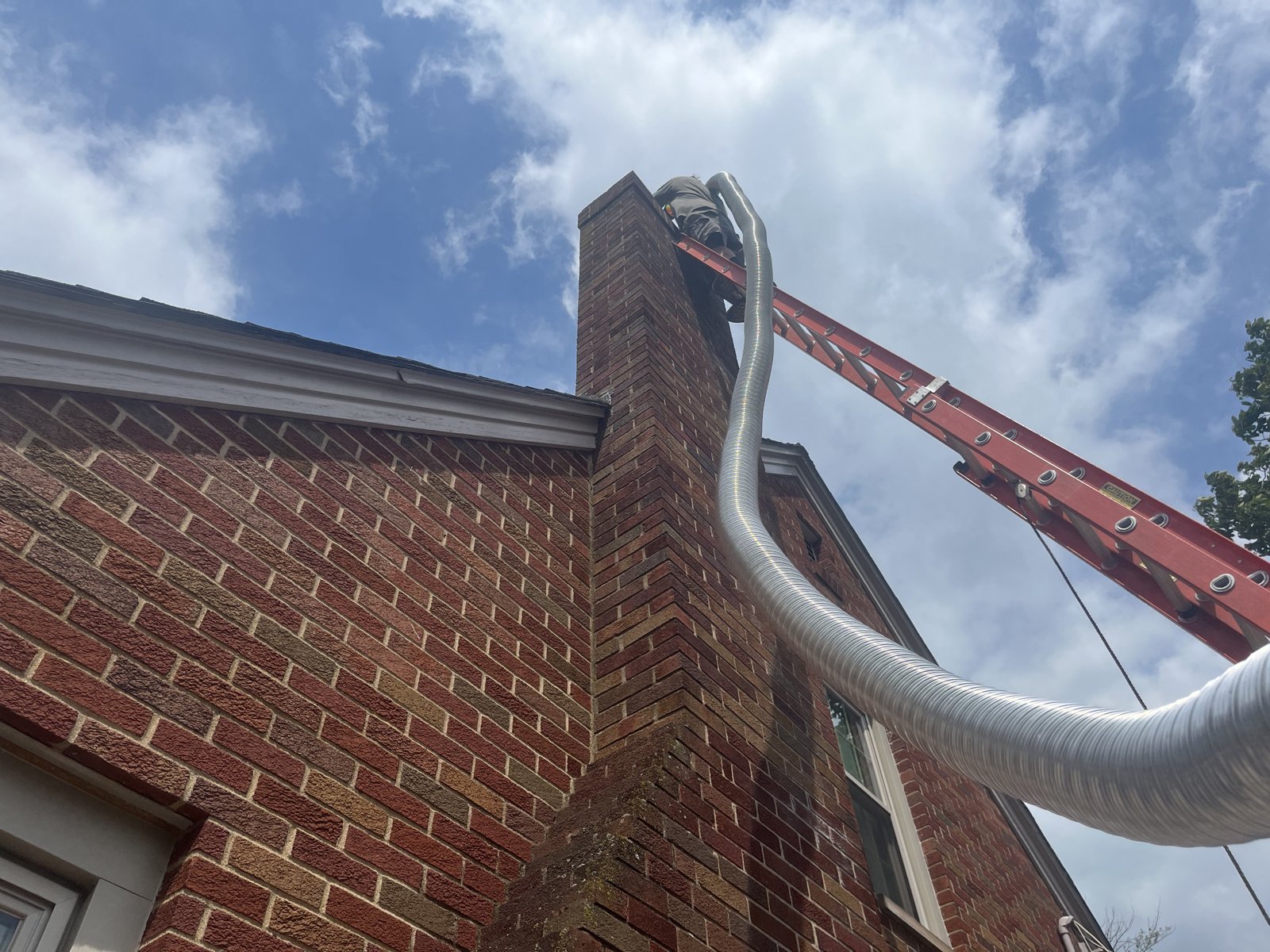
“Ben and his team are amazing. I had smoke coming all over my house after we run the fire for the first time in my new house in Cleveland heights. They used a chimney camera and showed me all the defects and exactly where the smoke is leaking back to my house. Very professional and reasonably priced. It’s hard to find good honest contractors these days. I would highly recommend them for anyone looking for any chimney inspection and or chimney repair. Thank you all the guys from Lewis chimney repair it was a pleasure”
7. What to Check, in Order, Before You Call
Work through these from the top, and stop as soon as the smoke stops. Each step is safe for a homeowner and none of them involves climbing onto the roof or opening up the flue.
1 | Let the fire die down and air out the roomDo not keep a smoking fire going. Open a window and wait until the firebox is cold. |
2 | Check the damperWith the fireplace cold, make sure the damper handle is fully open and that the plate actually moves. |
3 | Warm the flueHold a lit, rolled sheet of newspaper near the open damper for a minute or two before you light the fire. |
4 | Turn off the exhaust fans and dryerShut off the range hood, bath fans and dryer, and crack a window in the same room as the fireplace. |
5 | Use dry wood and build a small, hot fireStart with kindling and seasoned, split wood rather than one big log. |
6 | If it still smokes, stopDo not use the fireplace again until a chimney technician has inspected the flue. |
What You See and What It Usually Means
| What you notice | Likely cause | First thing to try |
|---|---|---|
| Smoke on the first cold day only | Cold flue | Warm the flue before lighting |
| Smoke the moment you light it, every time | Closed or stuck damper | Check the damper plate |
| Smoke gets worse when the range hood or dryer runs | Negative pressure in the house | Turn fans off, crack a window |
| Smoke on windy days only | Downdraft from wind, trees or a short chimney | Have the height and cap checked |
| Smoke plus a strong, sharp odor | Heavy buildup or a blockage | Stop using it and book a sweep |
| Smoke in other rooms or the basement | Flue damage or a leak in the system | Stop and call for an inspection |
When to Call for a Sweep and Inspection
If the simple checks do not stop the smoke, the next step is a chimney sweep and inspection. A technician clears any blockage, then looks at the damper, the flue and the cap with a camera so you can see what is going on inside, not just be told. We also offer a free drone inspection of the outside of the chimney, which is a useful way to check the cap, crown and height without anyone climbing up.
Call as soon as you notice smoke in the house more than once, any smoke in rooms away from the fireplace, a sharp smell that lingers, or soot staining on the walls or ceiling. Our 7 warning signs your chimney needs repair covers what else to look for, and how often to get your chimney cleaned helps you plan the yearly visit before the season starts. Homeowners in Beachwood, Cleveland Heights and nearby suburbs can reach us through the contact page below.
Common Questions About Smoke Coming Into the Room
Why does my fireplace smoke only when it is cold outside?
Is it safe to keep using a fireplace that smokes into the room?
Can running the range hood or dryer make my fireplace smoke?
Can wind make smoke come back down the chimney?
Do gas fireplaces smoke the same way?
Fireplace Still Smoking Into the Room?
If you have tried the simple checks and smoke is still coming into the house, stop using the fireplace until someone has looked at the flue. We sweep, inspect and repair chimneys across Beachwood, Cleveland and the surrounding suburbs.