The problem with chimney damage: Most of it is hidden. It happens 20–30 feet above your firebox, inside the flue where you can’t see it. By the time you notice something obvious — like smoke in the room or water stains on the wall — the damage has usually been building for months or years. These 7 signs are what to watch for before it becomes a major (and expensive) problem.
Why Chimney Damage Gets Missed
Chimneys are easy to ignore. They sit outside, they’re out of sight, and they only matter a few months a year. But Cleveland’s climate — freeze-thaw cycles, heavy snow, high humidity — is one of the harshest environments a chimney can be in. Water is the number one enemy of masonry, and Ohio gives it 365 days a year to work.
The good news: most chimney problems are inexpensive to fix if caught early. The expensive repairs — liner replacement, full chimney rebuilds, water damage to adjacent framing — almost always started as a small crack or a missing cap that was ignored for a season or two.
The 7 Warning Signs
1 White Staining on the Exterior Brickwork
That white, chalky residue on the outside of your chimney is called efflorescence — and it’s a direct signal that water is moving through the masonry. It forms when water carries mineral salts from inside the mortar or brick to the surface, then evaporates and leaves the salt behind.
Efflorescence itself isn’t structurally dangerous, but it’s a reliable early warning sign. Water is getting in somewhere — a cracked crown, a damaged cap, deteriorating mortar joints, or compromised flashing. Find the source and seal it before the water makes it inside the home.
2 Crumbling or Missing Mortar Joints
Run your hand along the mortar between bricks on an accessible section of your chimney. If it crumbles easily, has visible gaps, or is missing entirely in spots, the chimney needs tuckpointing — the process of removing deteriorated mortar and replacing it with fresh material.
In Greater Cleveland, freeze-thaw cycling is the primary culprit. Water soaks into mortar joints, freezes, expands, and mechanically breaks the mortar apart. This happens every winter. Over 10–15 years in Northeast Ohio, most unrepaired chimneys develop significant mortar deterioration.
Early vs. late: Tuckpointing a chimney with 20–30% deteriorated joints costs $400–$900 for most Cleveland homes. Waiting until 60–70% of joints are failing — or until bricks start shifting — can mean a partial or full chimney rebuild at $3,000–$8,000+.
3 Damaged or Missing Chimney Cap
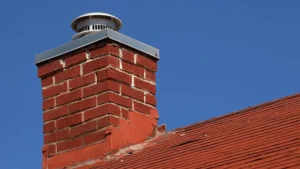
The chimney cap is the metal cover that sits over the top of the flue opening. Its job is simple but critical: keep rain, snow, animals, and debris out of the flue. Without it, or with a rusted/damaged one, water pours directly down the flue every time it rains or snows.
Look up at your chimney from the yard. You should see a metal cap with mesh sides. If it’s missing, sitting at an angle, visibly rusted through, or the mesh is torn, it needs replacement. Cap replacement is one of the least expensive chimney repairs — typically $150–$400 — and one of the highest-impact for preventing further damage.
4 Smoke Backing Into the Room
This is the sign most homeowners know to look for — and the one most often dismissed as “just draft issues.” Don’t dismiss it. Smoke backing into a room during a fire can mean several things, and most of them require professional attention:
| Cause | What It Means | Fix |
| Blocked flue (debris, animal nest, fallen tile) | Obstruction preventing proper draft | Chimney sweep + inspection |
| Negative air pressure in the home | Tight modern home draws air down the flue | Air gap fix or top-mount damper |
| Damaged or stuck damper | Damper not opening fully | Damper repair or replacement |
| Oversized flue for appliance | Gas insert installed in oversized wood-burning flue | Liner resize / insert sleeve |
| Cracked or collapsed liner | Draft escaping through cracks before reaching the top | Liner inspection + repair/replacement |
Never use a fireplace that consistently smokes into the room. Beyond the smoke itself, the issue may involve carbon monoxide. CO is colorless and odorless — smoke is the visible warning that combustion gases are entering your living space. Have it inspected before the next use.
5 Rust Stains in the Firebox or on the Damper
Open your fireplace and look at the firebox walls and the damper plate. Orange or brown rust staining means moisture is getting into the firebox — either through a missing cap, cracked crown, deteriorated flashing, or a damaged liner.
A little surface rust on a very old damper is normal. Heavy rust, a damper that won’t close fully, or rust staining running down the firebox walls from above all indicate active moisture intrusion that needs to be traced and stopped.
A rusty damper that won’t close properly also costs you money every month in heating bills — warm air escapes up the flue all winter even when you’re not burning.
6 Cracked or Deteriorated Chimney Crown
The chimney crown is the concrete or mortar slab that covers the top of the chimney structure — everything except the flue opening itself. It’s designed to shed water away from the chimney and prevent it from seeping into the masonry below.
From the ground, look at the top of the chimney with binoculars (or ask us to drone-inspect it). Signs of crown damage include:
- Visible cracks running across the crown surface
- Chunks missing from the edges
- Crown sitting unevenly or tilted
- Efflorescence on the top courses of brick (water running in right at the crown level)
Minor crown cracks can often be sealed with a crown coat sealant ($200–$400). Major crown failure requires removal and replacement ($500–$900). Left unaddressed, a failed crown lets water into the very top of the chimney — and it works its way down from there.
7 Tiles or Chunks of Material in the Firebox
If you sweep out your firebox and find pieces of clay tile, chunks of mortar, or other debris that clearly fell from above — that’s a significant warning sign. It means the liner is physically deteriorating and dropping material down the flue.
Clay tile liners in older Cleveland homes crack and spall over time, especially after a chimney fire (even a small one you may not have noticed). Pieces falling into the firebox can partially block the flue, and the gaps left behind in the liner can allow combustion gases to escape into the surrounding structure.
If you find tile or mortar chunks in the firebox, stop using the fireplace until it’s inspected. This is the classic sign of liner failure — and a failed liner is a fire and carbon monoxide risk. A camera inspection will show exactly how much of the liner is compromised.
The Problem with Waiting
Nearly every major chimney repair we do in Greater Cleveland started as a smaller problem that was deferred. The homeowner noticed something — efflorescence, a crumbling mortar joint, rust on the damper — figured it could wait until next season, and then forgot about it until the fireplace started smoking into the room three winters later.
Chimney repair costs follow a clear pattern: small problems are cheap. The same problems, left for 2–3 winters in Ohio’s climate, become expensive. Here’s what that looks like:
| Problem Caught Early | Cost (Early) | Cost After 3 Years Deferred |
| Mortar joint repair (tuckpointing) | $400–$900 | $2,500–$6,000+ (partial rebuild) |
| Chimney cap replacement | $150–$400 | $1,500–$4,000 (liner damage from water) |
| Crown sealing (minor cracks) | $200–$400 | $600–$1,200 (full crown replacement + water damage) |
| Liner crack repair | $500–$1,200 | $1,500–$5,500 (full liner replacement) |
| Flashing resealing | $200–$450 | $800–$3,000+ (interior water damage) |
What to Do If You Notice Any of These Signs
The right move is a professional inspection — not just a cleaning. A CSIA-certified chimney technician will do a Level 2 inspection with a camera to see what’s actually happening inside the flue, not just what’s visible from the firebox. This takes the guesswork out completely.
Lewis Chimney includes free drone inspection with every service appointment in Greater Cleveland. If we find a problem, we’ll show you exactly what it looks like and walk you through your repair options before any work is done.
See Something That Concerns You? Get It Inspected.
Lewis Chimney and Masonry — CSIA Certified, serving Chardon, Beachwood, Solon, Cleveland Heights, Wickliffe & Greater Cleveland. Free drone inspection included.
Frequently Asked Questions
How do I check my chimney myself before calling a pro?
From inside: open the damper and shine a flashlight up. Look for visible debris, fallen tile chunks, heavy black buildup on the damper, or rust staining. From outside: look at the chimney with binoculars for missing mortar joints, efflorescence, cap damage, or visible cracks. What you can see yourself is limited — most liner damage requires a camera to assess properly.
How much does chimney repair typically cost in Cleveland?
It varies widely by what’s needed. Simple repairs like cap replacement run $150–$400. Tuckpointing a full chimney is $600–$1,500. Liner replacement is $1,500–$5,500 depending on liner type and chimney height. A partial rebuild of badly deteriorated upper courses can run $2,000–$6,000+. The inspection tells you which category you’re in.
Can chimney damage cause a house fire even if I haven’t used the fireplace?
Yes. Chimneys with deteriorated liners or severe masonry damage can allow heat from a neighbor’s chimney fire, embers from nearby burning, or even spontaneous combustion of accumulated debris to transfer to house framing. More commonly, water damage from a failed chimney works its way into the roof structure and interior walls — no fire required to cause significant structural damage.
I just bought an older Cleveland home. What should I do?
Schedule a chimney inspection before the first use — this is standard advice for any home purchase. Many older Cleveland homes (pre-1960) have clay tile liners in poor condition, and some pre-1940 homes have no liner at all. You want to know what you’re working with before lighting a fire.