Five Reasons Rain Ends Up Inside Your Chimney, and What Fixes Each One
A chimney that only leaks when it rains is telling you something specific: water is getting past one of the parts built to shed it. In a Cleveland house that usually means the cap, the crown, the flashing, the mortar joints or the brick itself. Here are the five usual causes, the clue that points to each, and what a proper repair looks like.
1. A Missing or Damaged Chimney Cap
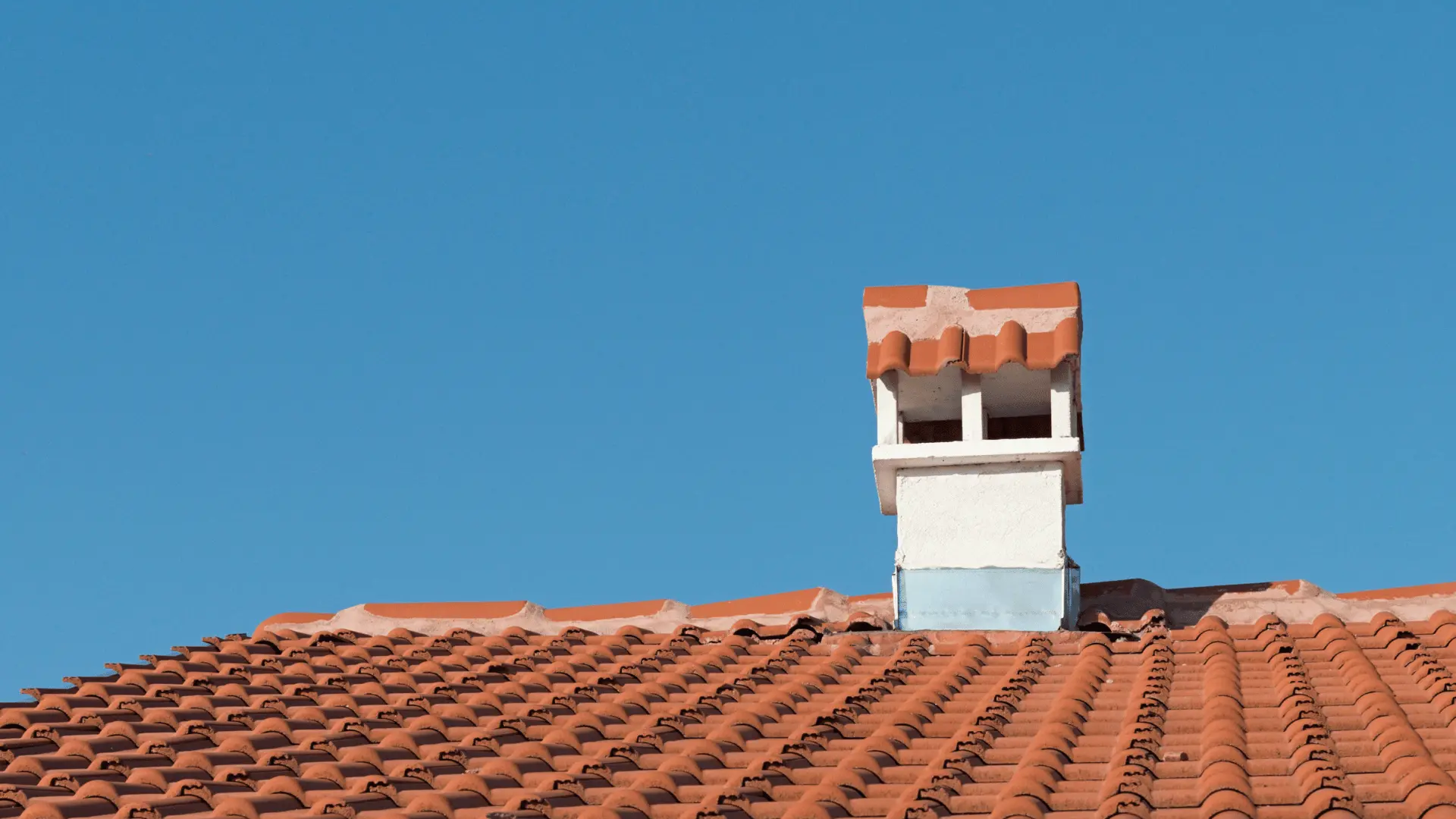
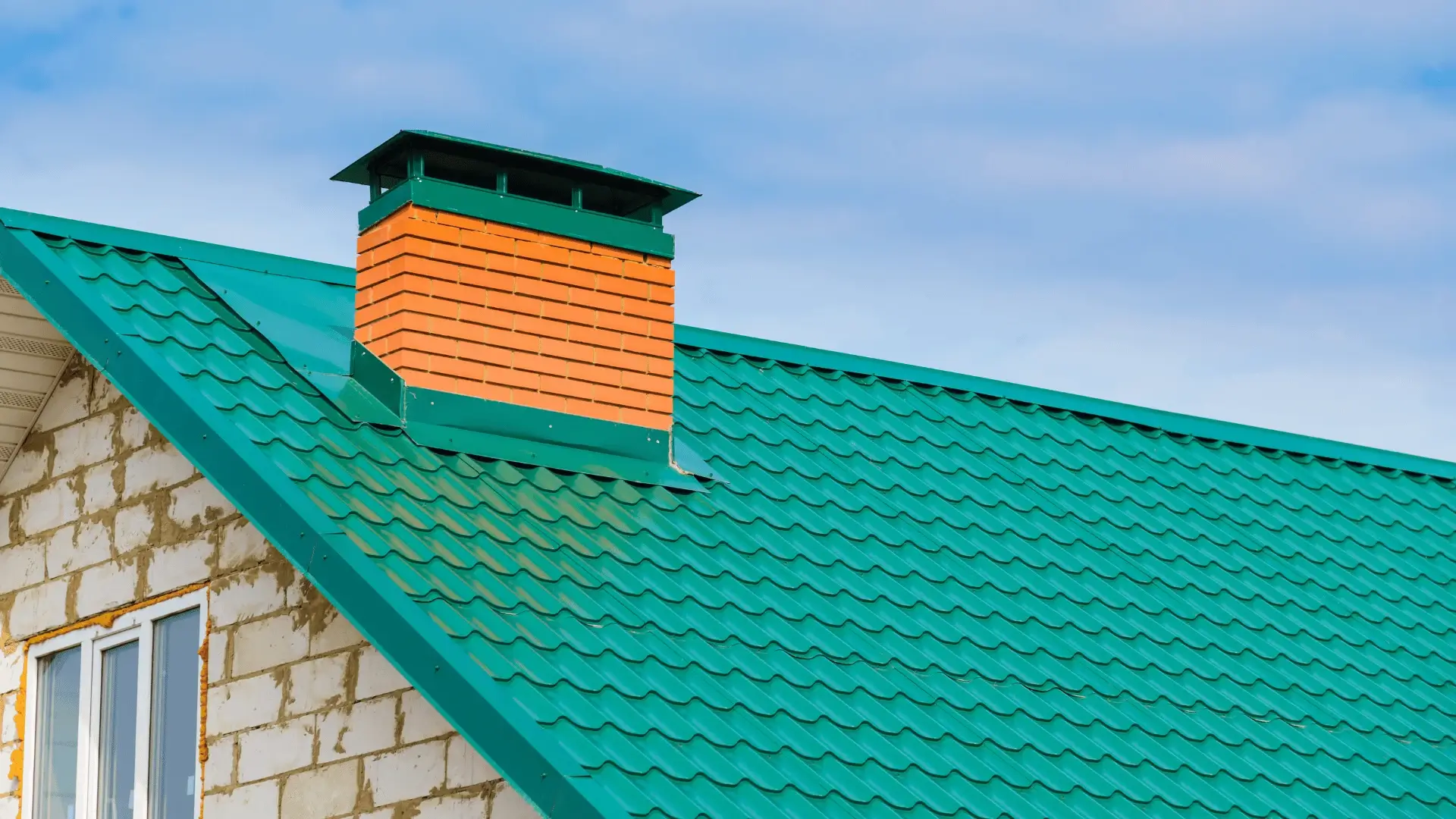
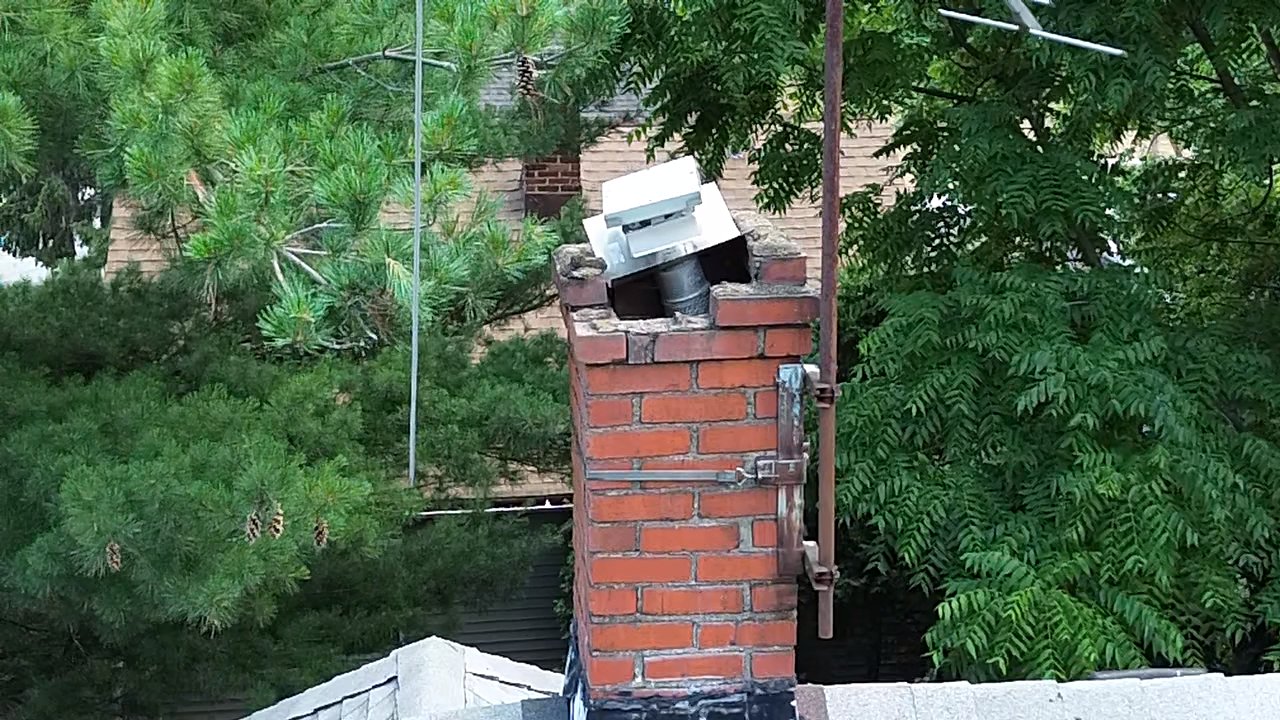
Start at the top. A flue is an open pipe pointed at the sky, and without a cap every storm drops water straight down it. According to the Chimney Safety Institute of America (CSIA), a well-designed cap will keep out rainwater and will also prevent birds and animals from entering and nesting in the chimney.
The telltale sign is water in the firebox itself, or a damp, smoky smell after a storm. Older Cleveland homes often have no cap at all, one rusted through, or one knocked crooked by a lake-effect wind. The fix is the simplest on this list: a properly sized stainless or copper cap with a mesh screen, which our chimney cap installation service measures, fits and secures.
2. A Cracked Chimney Crown
The crown is the sloped slab covering the top of the chimney around the flue tiles, built to send water off the edges rather than into the brick below. CSIA notes that crowns should project beyond all sides by two inches to help prevent erosion of the brick and mortar, and that a cast crown with an expansion joint is an ideal long-lasting replacement for the more commonly found sand and mortar washes.
Many local chimneys were finished with exactly that thin mortar wash, and those washes crack and crumble. Rain then runs into the top courses of brick and down inside the structure, usually showing up as a stain on the ceiling or wall beside the fireplace rather than in the firebox.
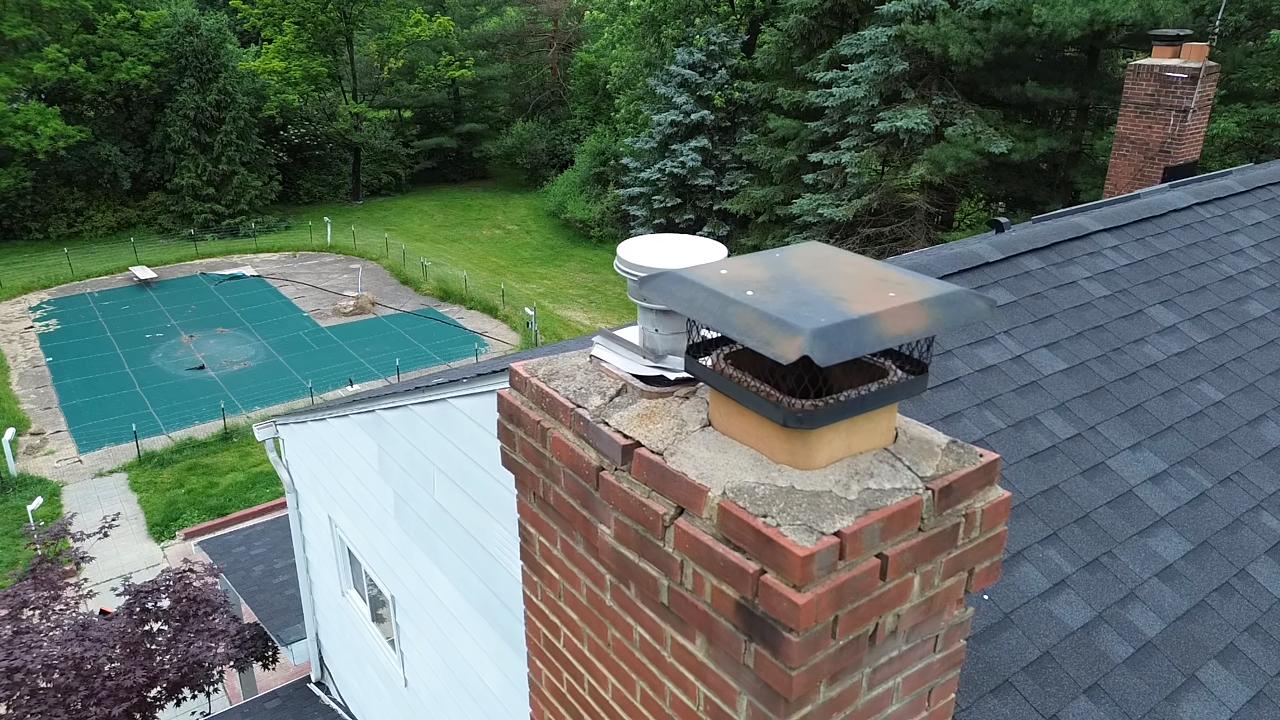
Hairline cracks can sometimes be sealed with a flexible crown coating. A crown that is crumbling, undersized or flush with the brick needs to be rebuilt as a proper cast crown with an overhang. We covered what a bad crown does in winter in The Hidden Dangers of a Damaged Chimney Crown During Winter Storms.
3. Failed Flashing at the Roofline
If the water appears on a ceiling or in the attic near the chimney rather than in the fireplace, flashing is the first suspect. CSIA describes flashing as the seal between the roofing material and the chimney that prevents rain water from running down the chimney into living spaces where it can damage ceilings and walls and cause rafters and joists to rot.
Flashing fails in predictable ways: the sealant along the counterflashing pulls away from the brick, the step flashing under the shingles rusts, a roofer reuses the old flashing with new shingles, or the house settles and opens a gap on the uphill side where water pools.
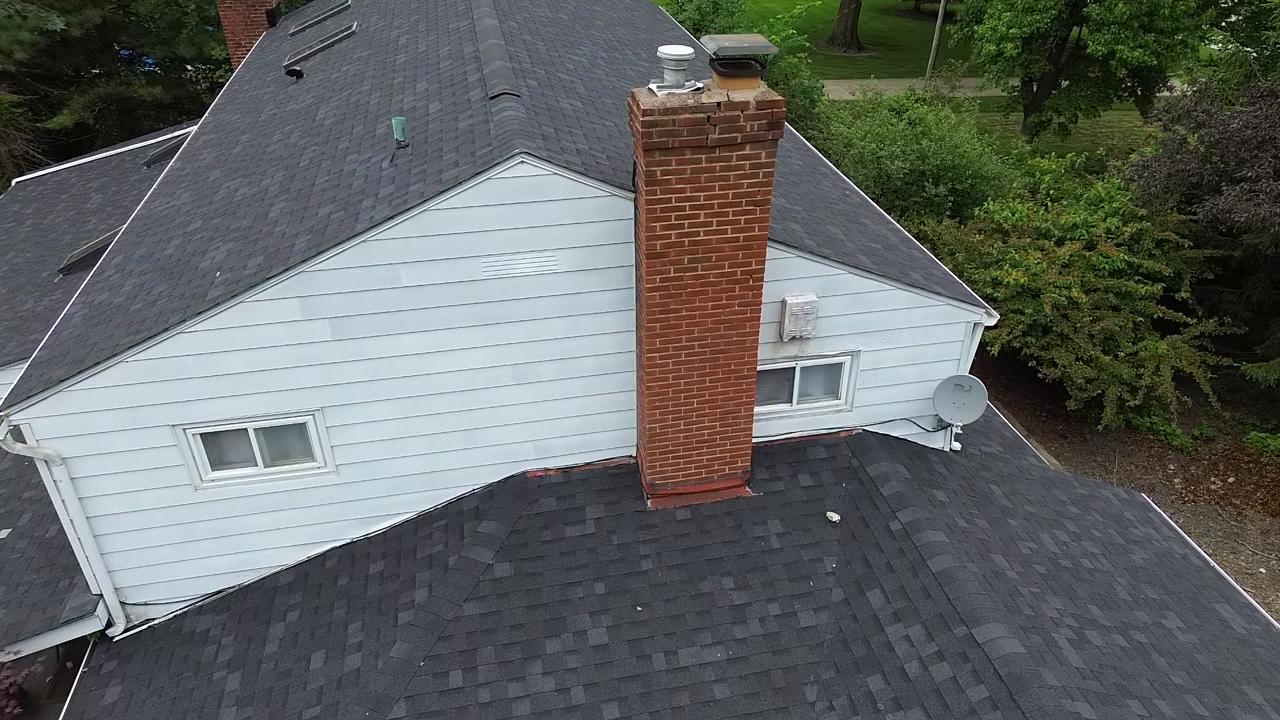
A smear of roofing tar is the fix most people try first, and the one that fails first. A lasting repair means new step flashing under the shingles, counterflashing cut into the mortar joints, and the joints resealed. Because the problem sits on the border between roof and masonry, it is worth having a chimney repair crew that does both look at it.
4. Deteriorated Mortar Joints
Mortar is the weak link in a brick chimney. The Brick Industry Association’s Technical Note 46 states that moisture may penetrate brick masonry through unbonded, cracked or deteriorated mortar joints, and that chimneys and copings with more severe exposure may require repairs at shorter intervals than ordinary walls. A chimney takes rain from every direction, plus Northeast Ohio’s long wet season and months of swinging above and below freezing.
If you can scrape mortar out of a joint with a key, or see sandy residue at the base of the chimney, the joints are letting water in. The repair is repointing, which most people in Cleveland call tuckpointing: the Brick Industry Association calls it one of the most effective ways to reduce moisture penetration. Our masonry repair service covers tuckpointing and replacing brick whose faces have already spalled off.
5. Brick That Soaks Up Water
Even a chimney with sound joints, a good crown and tight flashing can leak if the brick itself is saturated. CSIA puts it plainly: common brick is like a sponge, absorbing water and wicking moisture to the chimney interior, and defective mortar joints or improper mortar or brick greatly increase that tendency.
This is the cause behind leaks that seem to come from nowhere. After two or three days of steady rain the chimney shows damp plaster, peeling paint or a white powdery deposit on the brick, which the Brick Industry Association calls efflorescence and says will return unless the water ingress is resolved first. The fix CSIA recommends is waterproofing with a breathable product made for masonry, applied only after the crown, flashing and joints are repaired. Sealing a chimney with an active leak path traps the water inside.
How to Tell Which One It Is
You cannot diagnose a chimney leak from the living room with certainty, but the pattern narrows the list.
| Where the water shows up | Most likely cause | Check first |
|---|---|---|
| In the firebox, or dripping in the flue | Missing or damaged cap | From the yard: is there a cap, and is it level? |
| Ceiling or wall stain beside the chimney, worse in wind-driven rain | Flashing | Attic during rain: water at the roofline |
| Stains high on the chimney wall, damp attic around it | Cracked crown | Drone or roof view of the crown |
| Damp brick, sandy debris, leaks after days of rain | Mortar joints or porous brick | Scrape a joint; look for white efflorescence |
How to Stop a Chimney Leak for Good
Water usually has more than one way in, and fixing only the obvious one leaves the chimney leaking from the next. A proper repair runs top to bottom.
The Repair Sequence
1 | Inspect the whole chimney, not just the wet spotCap, crown, flashing, every face of the brick, the flue and the attic. CSIA’s guidance is an annual chimney inspection with sweeping or repair as needed, and a leak is the clearest reason to move it up. |
2 | Fix the top first: crown and capRebuild or seal the crown so it sheds water past the brick, then fit a cap. Everything below depends on the top being dry. |
3 | Reflash the rooflineReplace failed step flashing and counterflashing and reseal the joints into the mortar. |
4 | Repoint the joints and replace spalled brickTuckpoint eroded or cracked joints and swap out broken brick, using a mortar matched to the original. |
5 | Waterproof the masonry lastOnce every entry point is closed and the chimney has dried, apply a breathable masonry water repellent. |
Left alone, the damage compounds. CSIA lists broken brickwork, rusted dampers, rotted wood, cracked flue liners and even deteriorated central heating systems among the results of water penetration. If you are seeing any of the signs above, our Cleveland chimney repair team can find the entry point and give you a straight answer on what it needs.
What customers say
“Lewis Chimney did an amazing job capping my chimney and repairing the masonry. They were fast, very responsive and went the extra mile when there were issues that had to be resolved. The crew were friendly and fast. It was a very challenging situation and they really made the experience a positive one. 100% recommend using them for your chimney and masonry needs, especially if you are local to the Cleveland Heights / South Euclid area.”
Chimney Leak Questions We Hear in Cleveland
Why does my chimney only leak when it rains hard or the wind blows?
Can I fix a chimney leak myself with roofing tar or sealant?
Is water in the fireplace after rain dangerous, or just annoying?
Will waterproofing alone stop my chimney from leaking?
Water in the Fireplace Again?
Chimney leaks do not fix themselves, and every wet season makes the masonry worse. We find the actual entry point, including a free drone look at the crown, cap and flashing, and repair it properly. Chimney repair, caps, crowns, flashing and tuckpointing across Cleveland and the eastern suburbs.